


Assisted stretching exercises are increasingly used by personal trainers to improve flexibility, recovery, and overall movement quality in clients. Unlike self-directed stretching, assisted stretching exercises are delivered or guided by a qualified personal trainer who controls positioning, range, and intensity to support safer and more effective outcomes.
As modern fitness moves beyond simply lifting weights or burning calories, flexibility training, mobility, and recovery have become essential components of long-term progress. Assisted stretching exercises allow personal trainers to address muscle tension, limited range of motion, and postural imbalances in a structured, professional way.
This guide explains what assisted stretching exercises are, who they are suitable for, how they differ from other stretching methods, and how recovery tools like those from our partner Hyperice support their delivery, and why education is essential before offering assisted stretching services to clients.
Contents
- 1 What Are Assisted Stretching Exercises?
- 2 Who Assisted Stretching Exercises Are Suitable For
- 3 Assisted Stretching Exercises vs Self-Stretching
- 4 Assisted Stretching Exercises and Range of Motion
- 5 Neuromuscular Mechanisms Behind Assisted Stretching Exercises
- 6 Assisted Stretching Exercises vs Other Stretching Methods
- 7 Assisted Stretching Exercises Personal Trainers Commonly Use
- 8 How Hyperice Supports Assisted Stretching Exercises
- 9 Assisted Stretching Exercises, Injury Prevention, and Muscle Recovery
- 10 Safety and Professional Considerations for Personal Trainers
- 11 Why Education Matters Before Offering Assisted Stretching Exercises
- 12 Hyperice and The Fitness Group Partnership
- 13 Resources:
What Are Assisted Stretching Exercises?
Assisted stretching exercises are stretches performed with the help of an external force, most commonly a personal trainer or stretch therapist. Instead of relying solely on the client’s own strength or flexibility, the practitioner assists the movement to guide the body into a controlled stretch.
In personal training, assisted stretching exercises are used to:
- Improve joint movements and mobility
- Increase active and passive range of motion
- Reduce excessive muscle tension
- Support muscle recovery between sessions
Because the personal trainer controls the stretch, assisted stretching exercises can be tailored to individual needs, limitations, and health conditions. This makes them particularly useful for beginners, desk-based clients, and those returning to exercise after periods of inactivity.
Who Assisted Stretching Exercises Are Suitable For
Assisted stretching exercises can benefit a wide range of clients when delivered by a qualified personal trainer. They are commonly used with:
- General gym-goers looking to improve flexibility training and movement quality
- Strength trainees who experience stiffness from heavy or repetitive loading
- Desk-based clients affected by prolonged sitting and postural imbalances
- Older adults, where maintaining active range of motion supports daily function and independence
- Sports enthusiasts and professional athletes seeking improved recovery and functional performance
However, assisted stretching exercises are not appropriate for everyone. Clients with acute injuries, recent surgery, severe pain, or certain health conditions should be referred to a physical therapist or other healthcare professional before assisted stretching is introduced.
Assisted Stretching Exercises vs Self-Stretching
Self-stretching plays a role in flexibility training, but it has limitations. Many clients lack the body awareness, relaxation, or technical understanding needed to stretch effectively on their own. As a result, they may fail to reach an effective stretch or compensate with poor posture.
Assisted stretching exercises allow personal trainers to:
- Improve alignment during joint movements
- Adjust stretch intensity in real time
- Reduce protective muscle guarding
- Help clients relax into deeper stretches safely
Because the trainer provides guidance and feedback, assisted stretching exercises often lead to faster and more consistent improvements than self-stretching alone.
Assisted Stretching Exercises and Range of Motion
One of the primary benefits of assisted stretching exercises is improved range of motion. Range of motion refers to how far a joint can move through its available movement pattern, both actively and passively.
Assisted stretching exercises can improve:
- Active range of motion, where the client controls movement
- Passive range of motion, where movement is assisted externally
By guiding joint movements with proper positioning, personal trainers can help clients explore ranges they may not access on their own. Over time, this can improve functional performance in activities such as squatting, walking, running, and lifting.
Improved range of motion also supports better gait speed, stride length, and movement efficiency during everyday tasks.
Neuromuscular Mechanisms Behind Assisted Stretching Exercises
Effective assisted stretching exercises work with the nervous system rather than against it. When a muscle is stretched too aggressively, the body activates the stretch reflex, increasing muscle tension to protect the tissue.
Assisted stretching exercises reduce this response by:
- Applying gradual, controlled pressure
- Encouraging relaxation and slow breathing
- Allowing the nervous system to downregulate
One commonly used method within assisted stretching is Proprioceptive Neuromuscular Facilitation (PNF assisted stretching). PNF techniques alternate between contraction and relaxation phases to improve flexibility and active range of motion while reducing resistance from the stretch reflex.
Assisted Stretching Exercises vs Other Stretching Methods
Personal trainers use a variety of stretching approaches depending on the client and session goal.
Static stretching involves holding a stretch for time, but may not address neuromuscular control.
Dynamic stretching uses controlled dynamic movements to prepare the body for activity.
Active-assisted stretching blends client effort with external support.
Active Isolated Stretching uses short, repeated stretches to improve mobility.
Assisted stretching exercises stand out because they allow the trainer to continuously adapt pressure, positioning, and intensity based on client feedback.
Assisted Stretching Exercises Personal Trainers Commonly Use
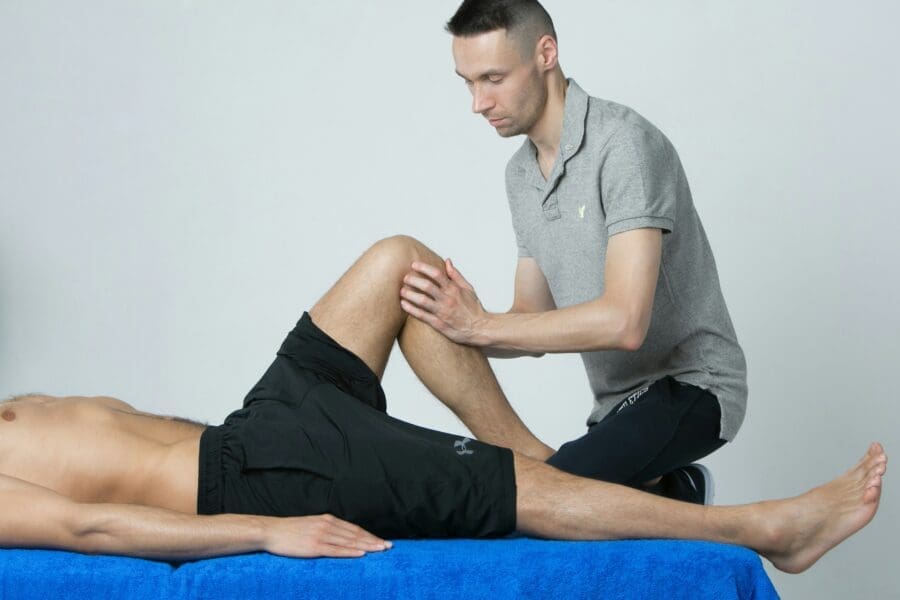
Below are examples of assisted stretching exercises frequently used by personal trainers in gym and recovery settings.
Assisted Hamstring Stretch (Supine)
Client position: Lying on the back with one leg extended
Trainer role: Supports the heel and guides the leg into hip flexion
Hold time: 20–30 seconds, 2–3 repetitions
Who it’s for: Clients with tight posterior chains or limited hip mobility
This assisted stretching exercise can improve hamstring flexibility and hip mobility, supporting walking mechanics and squat depth.
Assisted Hip Flexor Stretch (Half-Kneeling)
Client position: Half-kneeling with the rear knee on the floor
Trainer role: Stabilises the pelvis and gently guides the hips forward
Hold time: 20–30 seconds
Who it’s for: Desk-based clients or those with anterior pelvic tilt
This stretch helps reduce lower-back stiffness caused by prolonged sitting and repetitive lifestyle habits.
Assisted Chest and Shoulder Stretch (Seated)
Client position: Seated upright with arms guided behind the body
Trainer role: Supports the forearms and encourages controlled shoulder extension
Hold time: 20–30 seconds
Who it’s for: Clients with rounded shoulders or postural imbalances
Improving shoulder mobility can enhance upper-body training mechanics and posture.
Assisted Glute Stretch (Supine Figure-Four)
Client position: Lying on the back with one ankle crossed over the opposite knee
Trainer role: Applies gentle pressure to guide hip external rotation
Hold time: 20–30 seconds
Who it’s for: Clients experiencing hip tightness or restricted rotation
This assisted stretching exercise supports better hip function and gait economy.
Assisted Calf Stretch (Supine or Standing)
Client position: Supine or standing with heel supported
Trainer role: Guides ankle dorsiflexion while stabilising the knee
Hold time: 20–30 seconds
Who it’s for: Runners or lower-body dominant trainees
Improved ankle mobility can positively affect stride length and maximal walking speed.
Assisted Triceps Stretch (Seated or Standing)
Client position: Seated or standing with arm overhead
Trainer role: Supports the elbow and guides flexion carefully
Hold time: 20–30 seconds
Who it’s for: Clients with limited shoulder mobility
This stretch supports overhead movements and upper-body training comfort.
How Hyperice Supports Assisted Stretching Exercises
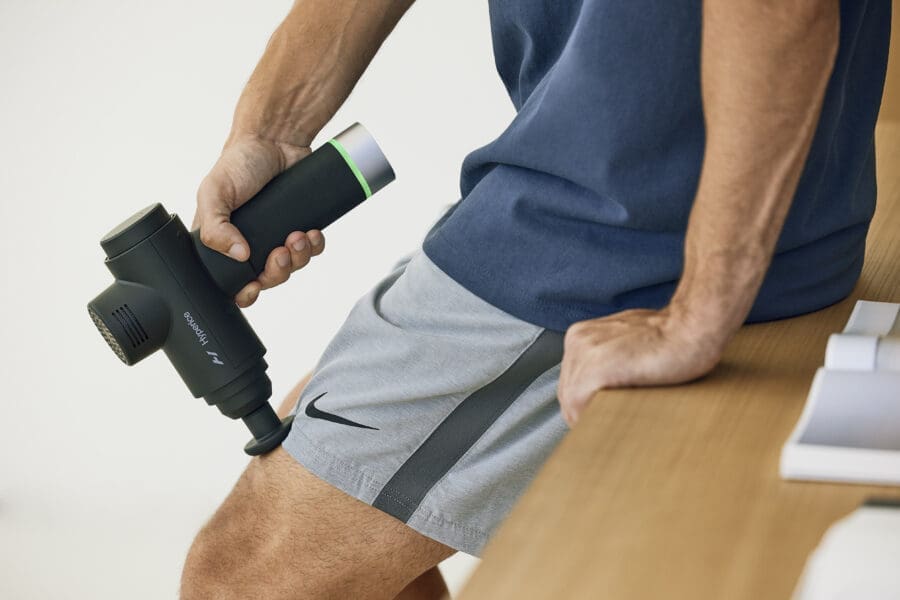
Hyperice recovery tools are often integrated into assisted stretching exercises to improve comfort and relaxation.
- Hyperice Hypervolt: Used before stretching to reduce muscle tension
- Hyperice Vyper: Supports warm-up and blood flow before assisted stretching
- Hyperice Venom: Heat and vibration help relax tight areas before stretching
- Hyperice Normatec: Used post-session to support muscle recovery and active recovery
These tools enhance assisted stretching sessions but do not replace professional judgment.
Assisted Stretching Exercises, Injury Prevention, and Muscle Recovery
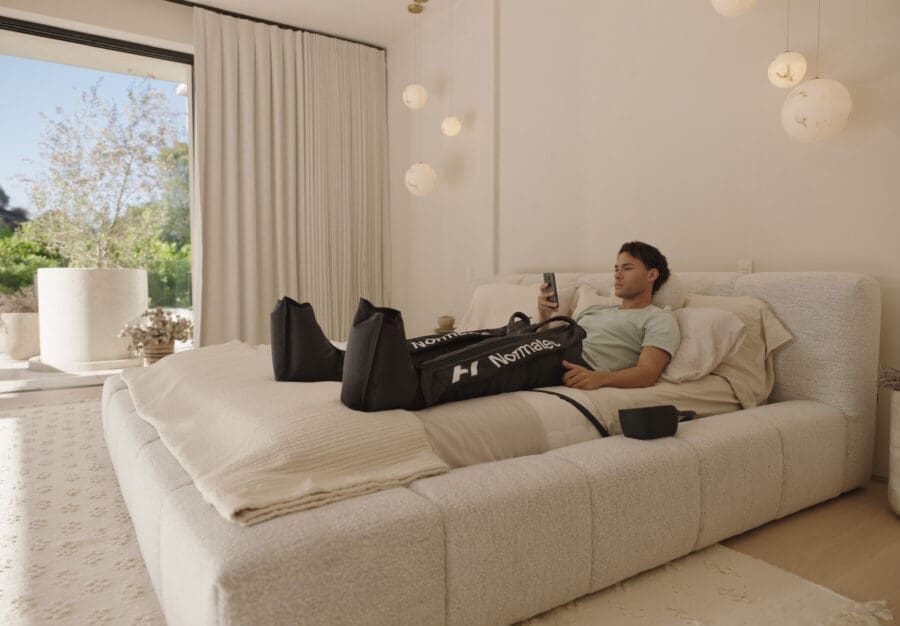
Assisted stretching exercises may support injury prevention by improving movement quality and reducing compensations. Improved blood flow and reduced muscle tension can also support muscle recovery following training.
While these techniques overlap with physical therapy principles, personal trainers must remain within scope and refer to a physical therapist when clinical intervention is required.
Safety and Professional Considerations for Personal Trainers
Personal trainers should screen clients carefully before delivering assisted stretching exercises. Considerations include:
- Existing health conditions
- Scar tissue or previous injury
- Client comfort and communication
- Maintaining appropriate professional boundaries
Education ensures assisted stretching exercises are delivered safely and effectively.
Why Education Matters Before Offering Assisted Stretching Exercises
Clients increasingly expect assisted stretching to be delivered professionally. Structured education ensures trainers understand anatomy, neuromuscular principles, and contraindications.
The Hyperice Assisted Stretch Course equips personal trainers with the skills required to deliver assisted stretching exercises confidently. Trainers can also explore the full range of Hyperice courses to expand their recovery expertise.
Hyperice and The Fitness Group Partnership
The partnership between The Fitness Group and Hyperice reflects a wider shift toward professional recovery education. Industry coverage highlights the importance of equipping personal trainers with evidence-informed recovery skills that meet modern client expectations.
Assisted stretching exercises are a valuable addition to modern personal training when delivered responsibly. By improving range of motion, supporting muscle recovery, and enhancing client experience, they help trainers deliver meaningful long-term results.
With proper education and professional application, assisted stretching exercises can become a trusted and effective part of personal training services.
Resources:
American Council on Exercise (ACE) (n.d.) Static vs dynamic stretching: What’s the difference? Available at: https://www.acefitness.org/education-and-resources/professional/expert-articles/ (Accessed: 15 December 2025).
American Heart Association (2024) How much and how often should people stretch? Available at: https://www.heart.org/en/news/2024/08/07/how-much-and-how-often-should-people-stretch (Accessed: 15 December 2025).
Behm, D.G. and Chaouachi, A. (2016) ‘A review of the acute effects of static and dynamic stretching on performance’, European Journal of Applied Physiology, 116(11–12), pp. 2139–2150. Available at: https://pubmed.ncbi.nlm.nih.gov/26642915/ (Accessed: 15 December 2025).
Chartered Society of Physiotherapy (n.d.) What is a physiotherapist? Available at: https://www.csp.org.uk/careers-jobs/what-physiotherapist (Accessed: 15 December 2025).
Hindle, K.B., Whitcomb, T.J., Briggs, W.O. and Hong, J. (2012) ‘Proprioceptive neuromuscular facilitation (PNF): Its mechanisms and effects on range of motion and muscular function’, Journal of Human Kinetics, 31, pp. 105–113. Available at: https://pmc.ncbi.nlm.nih.gov/articles/PMC3588663/ (Accessed: 15 December 2025).
National Academy of Sports Medicine (NASM) (n.d.) Workout and exercise guidance resources. Available at: https://www.nasm.org/workout-exercise-guidance (Accessed: 15 December 2025).
National Center for Biotechnology Information (NCBI) (n.d.) Deep tendon reflexes. In: NCBI Bookshelf. Available at: https://www.ncbi.nlm.nih.gov/books/NBK396/ (Accessed: 15 December 2025).
National Health Service (NHS) (n.d.) Exercise and health conditions. Available at: https://www.nhs.uk/live-well/exercise/ (Accessed: 15 December 2025).
Nunes, J.P., Grgic, J., Cunha, P.M., et al. (2023) ‘Chronic effects of stretching on range of motion: A systematic review and meta-analysis’, Sports Medicine, 53(2), pp. 287–302. Available at: https://pmc.ncbi.nlm.nih.gov/articles/PMC10980866/ (Accessed: 15 December 2025).
Physiopedia (n.d.) Stretching. Available at: https://www.physio-pedia.com/Stretching (Accessed: 15 December 2025).
Physiopedia (n.d.) Range of motion. Available at: https://www.physio-pedia.com/Range_of_Motion (Accessed: 15 December 2025).
Physiopedia (n.d.) Proprioceptive neuromuscular facilitation. Available at: https://www.physio-pedia.com/Proprioceptive_Neuromuscular_Facilitation (Accessed: 15 December 2025).
Sharman, M.J., Cresswell, A.G. and Riek, S. (2006) ‘Proprioceptive neuromuscular facilitation stretching: Mechanisms and clinical implications’, Journal of Strength and Conditioning Research, 20(3), pp. 55–60. Available at: https://pubmed.ncbi.nlm.nih.gov/17052131/ (Accessed: 15 December 2025).